New Jersey has made huge strides in becoming an age-friendly state, laying the groundwork and the “Blueprint” for meeting the needs of our aging population. As the age-friendly work grows, a Multisector Plan for Aging is the natural next step in preparing for our shifting demographics.
Read on to see the recent blog from the Age-Friendly NJ Alliance
A Year of Monumental Advances for Aging Advocates…
The age-friendly movement in New Jersey deepened and widened in 2025, so much so that our alliance is starting the New Year with a new name, greater statewide impact, stronger advocacy partnerships and an expanded role in mentoring new community leaders.
Our alliance re-christened itself Age-Friendly NJ this summer, after the launch of 28 new age-friendly initiatives in New Jersey, many located outside of the North Jersey region where our alliance formed a decade ago.
The new name reflects our commitment to serving as an inclusive and expansive platform for age-friendly education, advocacy and partnership-building across the Garden State.
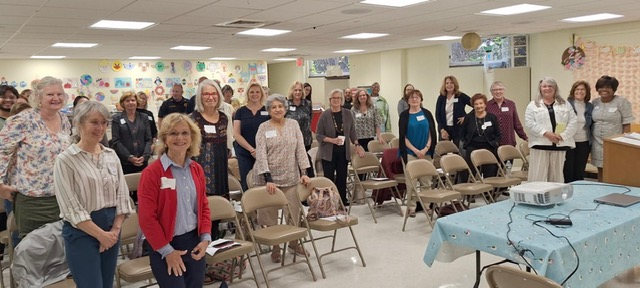
2025 was a year of heightened focus on aging issues in New Jersey, as well as increased coordination among the advocacy groups, provider organizations and government entities that work on behalf of older adults and individuals with disabilities – another important aim of New Jersey’s age-friendly movement.
The year also saw many or our alliance’s local leaders stepping into mentorship roles by publishing helpful guides, organizing informational workshops and facilitating networking and partnership opportunities.
Potential doubling of age-friendly network in NJ
At the start of 2025, New Jersey had 28 members of the AARP Network of States and Communities (22 communities, 5 counties and the state of New Jersey itself). By year’s end that number could be doubled.
That’s because 22 communities and 6 counties were awarded funding from the New Jersey Age-Friendly Grants Program of the Department of Human Services to execute the initial community assessments and action plans required to join the AARP network.
The list of awardees includes large cities, suburban enclaves and rural hamlets in 17 of New Jersey’s 21 counties, greatly adding to the geographic and demographic diversity of the Garden State’s age-friendly movement.
The state grant program also awarded 10 organizations separate grants to undertake regional and statewide projects addressing some of the recommendations outlined in the New Jersey Age-Friendly Blueprint.
All the grantees are receiving technical assistance from the Rutgers University Bloustein School of Planning and Public Policy, in the hope that they learn strategies for creating sustainable progress.
The state is also funding an evaluation study led by the Rutgers Hub for Aging Collaboration, which will chronicle the projects and seek to expand awareness and understanding of the value of age-friendly community work.
Rutgers Hub for Aging Collaboration is part of the coordinating team that helps plan programming and strategy for Age-Friendly NJ. Several other organizations allied with our alliance are among the project grantees, including New Jersey Advocates for Aging Well, which is partnering with the Age-Friendly Institutes to establish a Certified Age-Friendly Employer (CAFÉ) program. A full list of grantees can be found here.
Our alliance will work in 2026 to raise awareness of these grant-funded projects while also offering the leaders of new community initiatives our mentorship and an opportunity to be part of our growing advocacy and public awareness efforts.
Advocacy on Aging-Related Issues Reached New Highs in 2025
Faced with dramatic federal budget cuts and policy shifts, groups advocating for better care and services for older adults and individuals with disabilities joined forces to try to educate more New Jerseyans about the impact on the lives of people of all ages.
As a result, several new advocacy alliances were born in 2025.
Garden State Coalition for Better Care formed in response to H.R. 1, which cut federal funding for critical programs such as Medicaid and SNAP and enacted burdensome eligibility checks and new work requirements affecting millions in New Jersey. The coalition, steered by Disability Rights New Jersey and Justice in Aging, is also working to persuade New Jersey’s leaders to change Medicaid eligibility rules to enable more people in need of care to be able to receive it in their homes and communities.
Because New Jersey was in the throes of a heated governor’s race in 2025, leaders of Age-Friendly NJ joined with many other state and regional organizations to form Lifelong Strong, a public relations campaign to make population aging a priority issue. This campaign seeks to have the new administration develop a Multisector Plan for Aging, a comprehensive strategy many other states have already adopted.
Another advocacy campaign, the Essential Jobs, Essential Care coalition, also gained steam last year in its yearslong effort to find strategies to address New Jersey’s shrinking pool of workers in nursing homes, assisted living residences and home-care settings. In a truly significant victory, a special inter-agency group of state officials, led by the Department of Human Services, published a Direct Care Workforce Strategic Plan that categorizes and prioritizes a list of strategies the state can use to strengthen the direct care workforce in the years ahead.
Coalition-Building Also Increased at the Local Level
As statewide advocacy on aging issues strengthened in 2025 so too did efforts to support local age-friendly leaders in forming new and different kinds of partnerships and to offer them networking and age-friendly community-building tools.
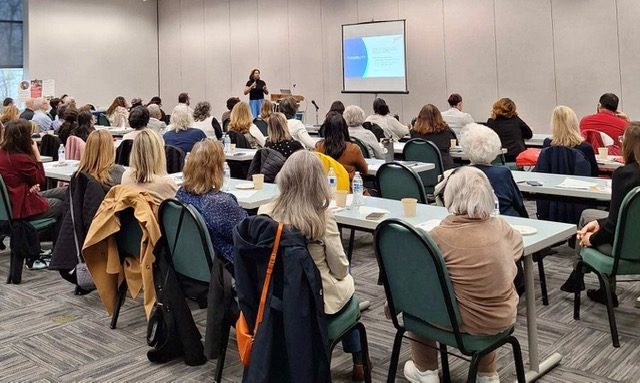
NJAAW led our alliance in efforts to diversify the ranks of local leaders participating in age-friendly efforts, with special events that targeted librarians, senior center leaders and local transportation providers and planners.
With the help of a new grant, NJAAW launched an effort in 2025 to revive the New Jersey Senior Center Association, an undertaking that will offer resources, training, and ways for leaders to connect and learn from one another.
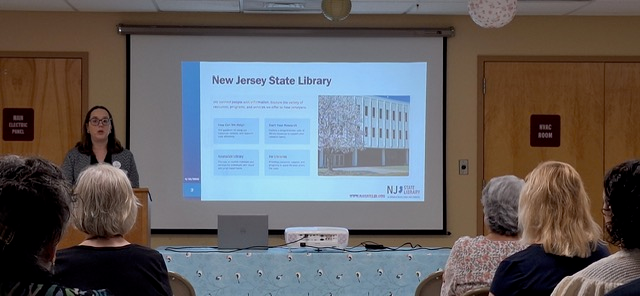
A similar effort is underway with local library leaders, sparked in September when Age-Friendly NJ hosted an event at the Leonia Public Library to illuminate the powerful role public libraries play in fostering age-friendly communities.
Our alliance continued its efforts to be a resource for both new and veteran age-friendly community leaders.
In April, NJAAW partnered with AFNJ and New Jersey Travel Independence Program (NJTIP @ Rutgers) to host a transportation symposium aimed at increasing local leaders’ awareness of safe travel options for older and disabled adults.
NJAAW also produced a new publication, Primer for Building Age-Friendly Towns and Communities, a 19-page guide that shares the experiences, successes and resources from active age-friendly communities.
Local age-friendly leaders also did their part to share their knowledge and experience as they continue to sustain their community’s age-friendly initiatives:
Age-Friendly Ridgewood compiled and published The Municipal Toolkit for Building an Age-Friendly Community, which offers a department-by-department breakdown on how to engage municipal leaders in age-friendly work.
Aging Well West Orange produced an Older Adult Resources Guide that is a model other communities can replicate, while leaders in Glen Rock undertook the start-up of the Glen Rock Neighborhood Network, which uses the so-called “village model” to help support aging-in-place.
Age-Friendly Teaneck’s leaders received renewed funding from the state’s Inclusive Healthy Communities program, with part of the goal being to create more synergy among local providers who serve older adults and those who serve people with disabilities. That effort was supported by Age-Friendly Bergen Roundtable, which hosted an event called “Service without Silos,” in October, as part of its bimonthly series of meetings to connect local advocacy leaders and service providers in Bergen County.
As monumental as 2025 was to the age-friendly cause, our leaders are optimistic that New Jersey will continue to make significant advances in 2026 toward the goal of making the Garden State as great a place to grow old as it is to grow up. The year ended with another major announcement from the Department of Human Services, the launch of the Senior Wellness Pilot Program Grant.
That $4 million grant program is seeking proposals on how to tackle the scourge of social isolation and its associated health ills.
We look forward to hearing of the innovate strategies that grant program will yield. And we look forward to another significant year of age-friendly advances.
Here’s to a Happy and Age-Friendly New Year!